“Japan, An Artistic Melting Pot” exhibition at the Kyoto National Museum

I visited the “Japan, An Artistic Melting Pot” exhibition at the Kyoto National Museum, and I was absolutely shaken by the gathering of Japan’s national treasure collections. I don’t think there will ever be another opportunity like this to see so many national treasures in one place at once!

With the Osaka and Kansai Expo in mind, the National Museum is certainly putting on quite a show. Works like the Fujin Raijin-zu byōbu (Wind and Thunder Gods Folding Screen) and Fugaku Sanjūrokkei – Kanagawa Oki Nami Ura, Gaifū Kaisei (Thirty-Six Views of Mount Fuji – The Great Wave off Kanagawa and the Fine Wind, Clear Morning) are on display together.
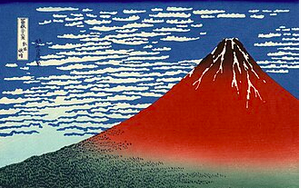
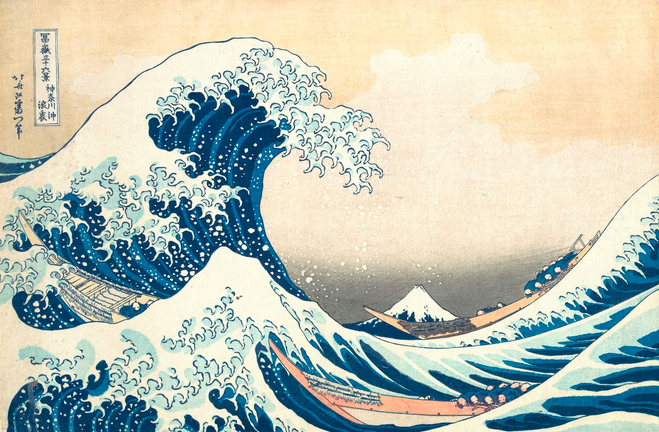
Typically, national treasures and sculptures are preserved by the temples or institutions that have inherited them over generations, so it’s expected that many would be in the Kansai region. But even in Tokyo, it’s rare to see such a collection all in one place!

From Japan to abroad and from abroad to Japan: in many ways, Japan has been influenced by other countries, while also influencing the world. Amidst misunderstandings and modifications, there is a constant curiosity and awe in the artworks and sculptures that reflect newly seen animals, plants, people, foreign cultures, and first encounters with foreign artists and works of art.

Personally, I really like the ceramics and Nanban (Southern Barbarian) folding screens from the 16th century, Momoyama period. They beautifully blend Japanese and foreign cultures—just the right balance.

Also, the artworks featuring motifs of flowers, birds, wind, and moon, landscape paintings, mother-of-pearl inlay, and maki-e lacquerware boxes are all wonderful. The haniwa (ancient clay figures) are also adorable. (Yes, I love them all! Haha)

I spent a full three hours, and even participated in making a maki-e letter paper and envelope workshop, which took about four hours in total. Still, it felt like I didn’t have enough time.

Perhaps because of the rain, or maybe despite it, the Kyoto National Museum had a large crowd, and it was hard to view each piece slowly and carefully. It truly was an extraordinary exhibition, one that you rarely encounter!
Japanese tea ceremony – the spirit of “Omotenashi”

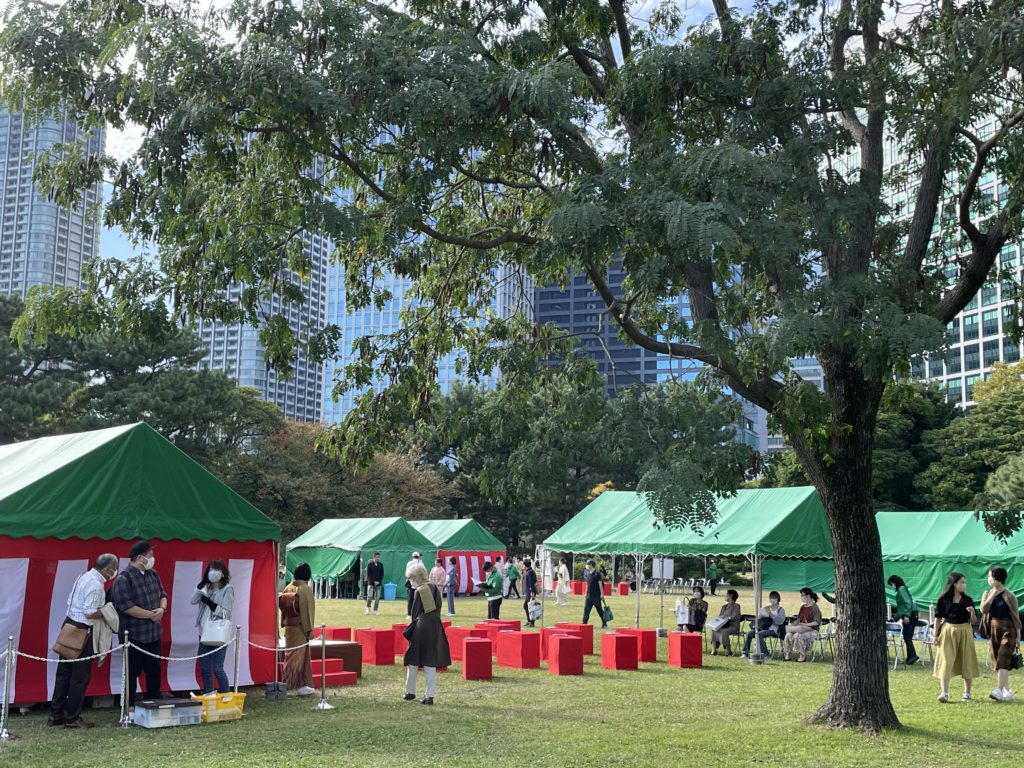
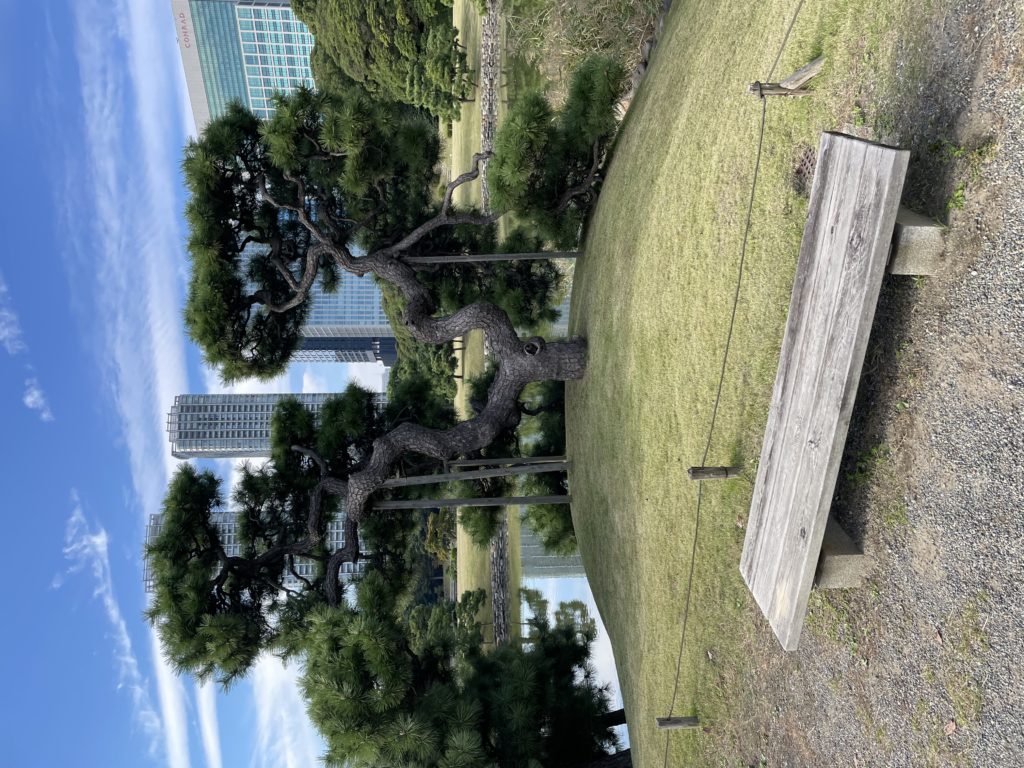
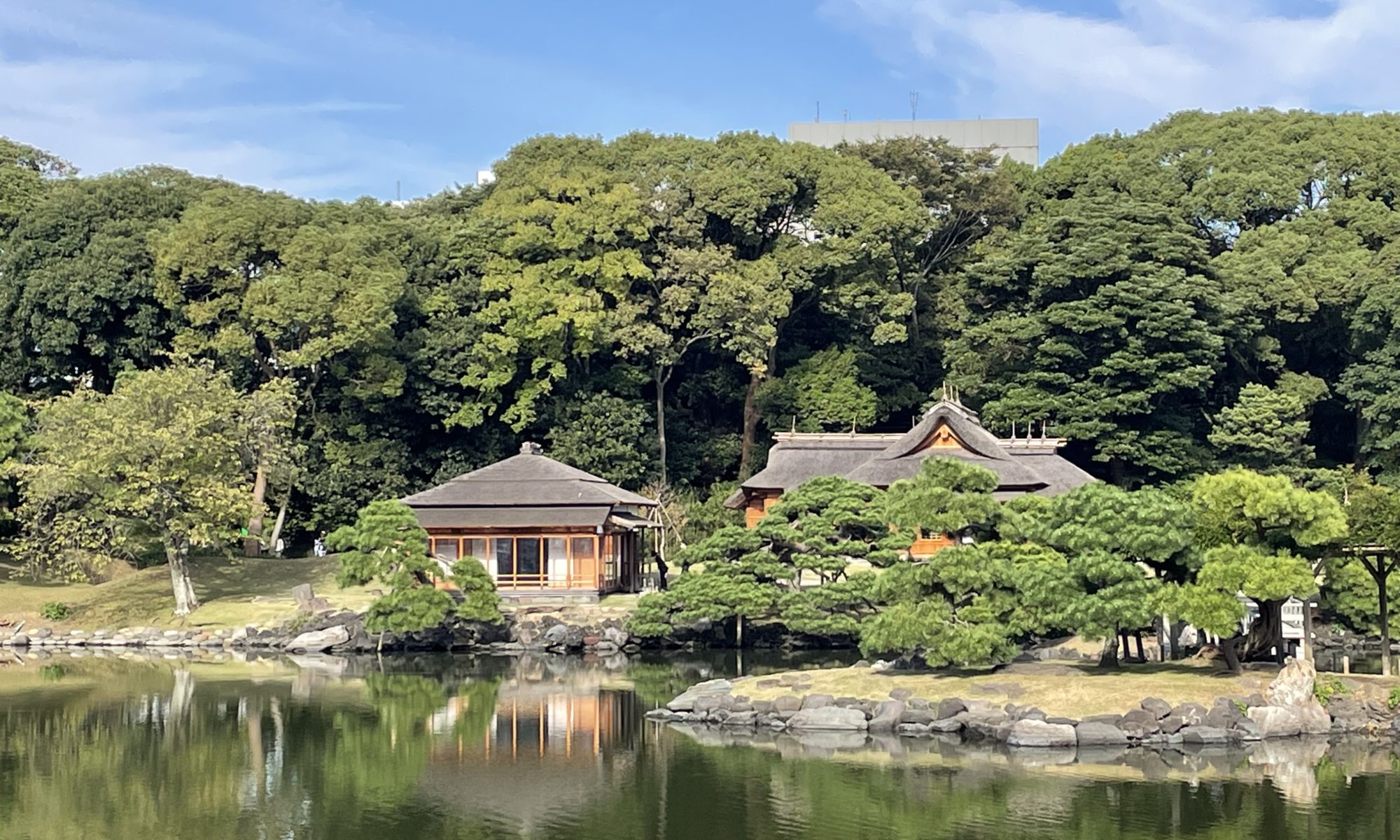
Tokyo Grand Japanese Tea Ceremony was held in Hama Rikyu Gardens on October 2022. It had been held on regular basis from 2020, then the first time ceremony in three years after 2 times cancellations due to covid-19 pandemic.

Tea ceremony – it is called “Sado” “Chanoyu” in Japanese, we have no choice but to mention – “The Book Of Tea” – originally written by Okakura Tenshin in English. The book is very famous in western countries, literally, it is still playing an important role in introducing Sado’s background and philosophy. The book is also very useful guideline for beginners who would like to know the heart of Chanoyu or knowing Japanese esoteric culture and history.

Basically, the event was divided into four programs and areas.

1. Tea ceremony (Indoor)

2. Outdoor tea ceremony (called Nodate in Japanese)

3. Outdoor tea ceremony by high school student.

4. Indoor tea ceremony in English

Pre-registration tickets were available in the website below,

https://tokyo-grand-tea-ceremony.jp/en/index.html

Walk-up tickets were limited available in case of having seat cancellations.

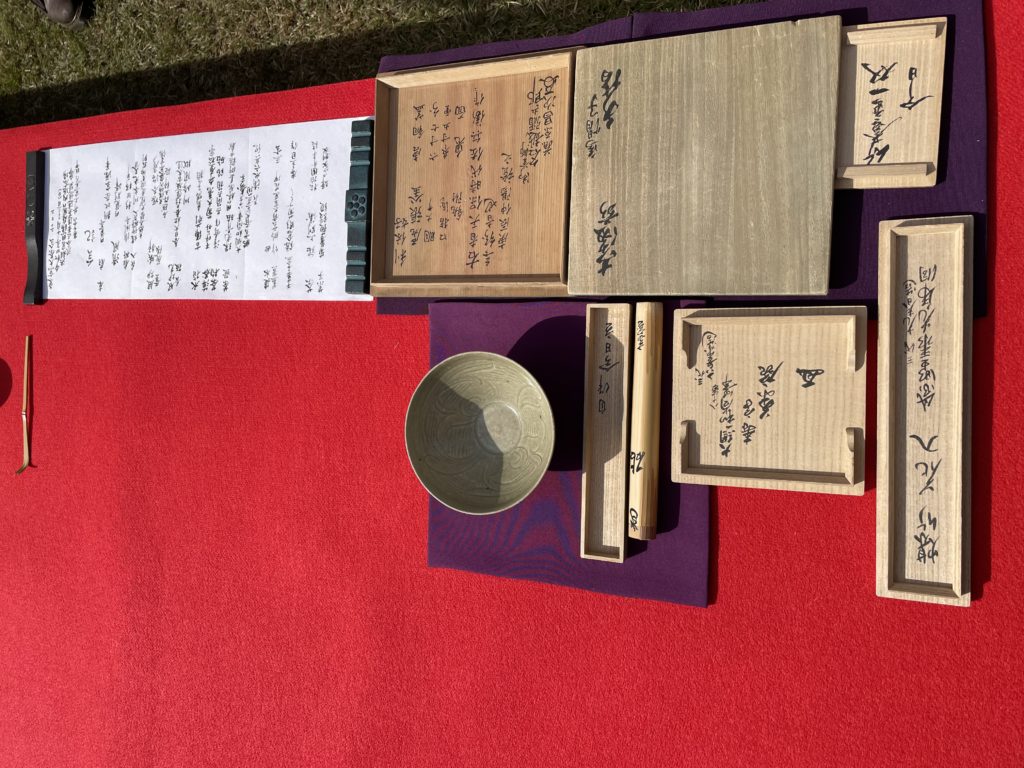
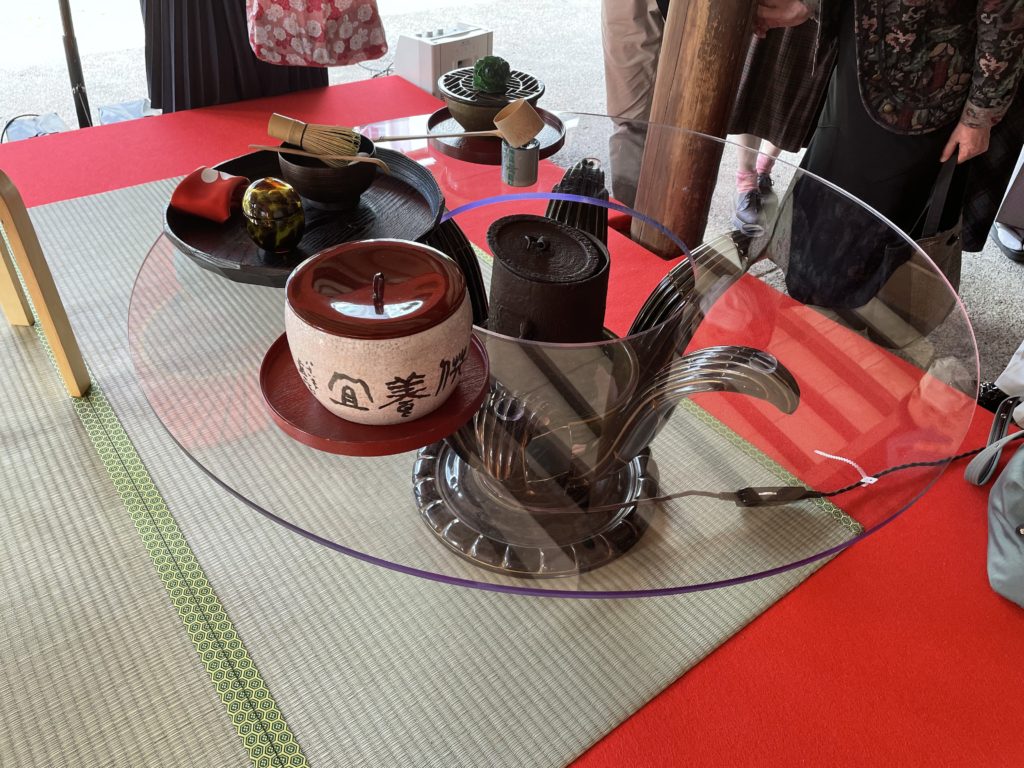
”Cha-Dougu” 茶道具 Tea utencils

The participants will definitely enjoy the world of “Chanoyu” with a cup of green tea (Maccha) and Japanese traditional sweets (Wagashi) only 500 yen!

It is no wonder if you might be a little bit scared to participate in tea ceremony for the first time, frankly, even I am a Japanese, still felt like “having a high threshold” for formal Chanoyu entry because it has strict manners to share same atmosphere and space with the host and other guests.

However, this event is largely open for Chanoyu beginners who are just interested in Japanese Tea Ceremony and Japanese gardens and culture, also Nodate(outdoor tea ceremony) is more casual tea ceremony party so you can join them with ease.

They will hand out brochure, which gives you the basic instruction of tea ceremony. So don’t worry! You don’t hesitate to join them!

”Nodate”野点 Tea ceremony (Outside)

The instruction of tea ceremony – quoted from Tokyo Grand Tea Ceremony 2022 brochure. The ceremony carries on like this.

  • Guests should remove watches and accessories such as rings and bracelet before entering the tearoom, so as not to damage the tea container and utensils.
  • It is said that as a general manner, guests should wear white socks or tabi, and bring along “kaishi” paper and picks used for eating wagashi Japanese sweets.
  • Manners may differ between tea schools. Please listen carefully to the commentary of teacher and put it in practice.
  1. When wagashi Japanese sweet are served, you say : “Osaki-ni (pardon me for going ahead)” to your neighbor, transfer a wagashi to the “kaishi” paper  in front of you, pick wagashi are eaten before the drinking of the tea.
  2. When tea is served, you say : “Osaki-ni (pardon me for going ahead)” to your neighbor, put the tea bowl in front of you and bow to the host. You take it in your right hand, place it on the palm of your left hand and raise it slightly with gratitude. With the front of the bowl toward you, rotate in twice to avoid drinking from the front, and then drink all the tea in a few sips.
  3. When you have finished drinking, use the thumb and index finger of your right hand to lightly trace the part of the tea bowl rim from which you drank, and then wipe your fingers with a “kaishi” paper.
  4. Then turn the bowl back twice so that the front faces you and place the bowl in front of you.
  5. After looking at the tea bowl in appreciation, turn it with its front towards the host.
Tea ceremony in English

The Sado or Chanoyu – is traditional Japanese way of drinking tea in accordance with set rules of etiquette. the point is – both the host and guests  share a sense of togetherness during the ceremony.

The Chanoyu was mostly perfected by Rikyu Sen in the Azuchi-Momoyama period in the latter half of the sixteenth century.

As it were, the core of “heart of Chanoyu” is felling the hosts’ hospitality – they always take utmost care in the preparation of their tea rooms, the adjacent garden, tea utensils and the provision of simple dishes for the exquisite tea room.

The tea ceremony etiquette has been influenced by the etiquette observed by the samurai classes as well as by the form of Noh dances. In turn, the tea cult had a great influence on traditional Japanese customs and manners.

Japanese hospitality – sometime calls “Omotenashi” in Japanese is a part of  Chanoyu, which also represents sense of Chanoyu sprits from Rikyu.

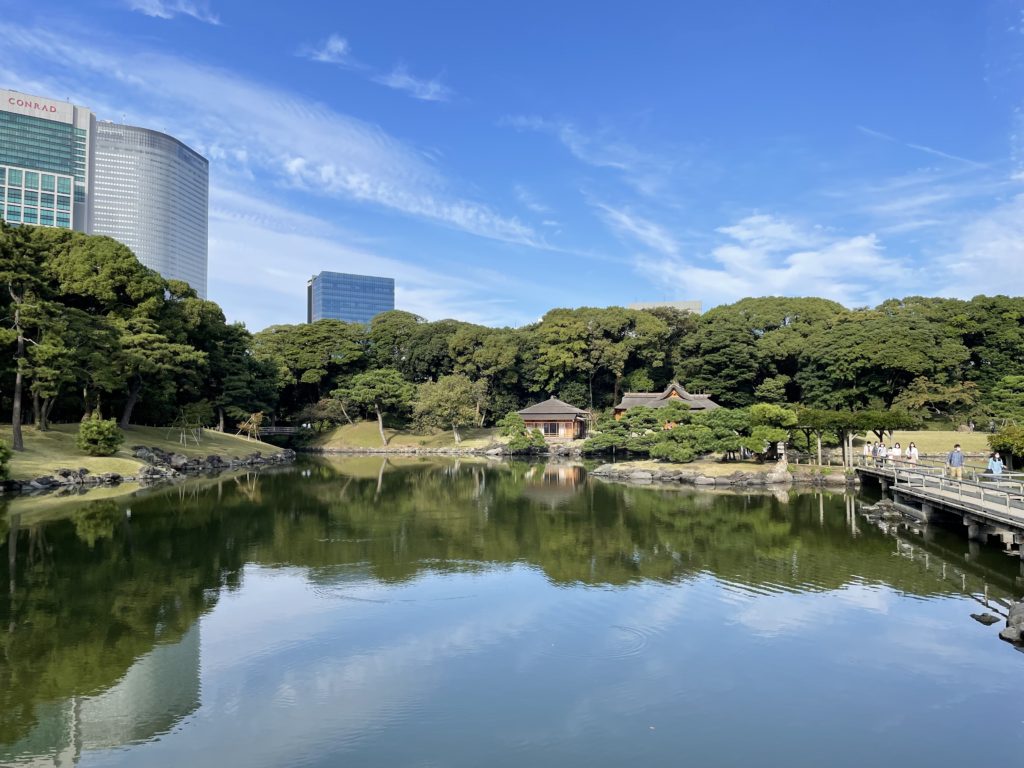
Hama-rikyu Gardens

https://www.gotokyo.org/en/spot/20/index.html

Japanese Ikebana – emerges small universe – the aesthetics of “beauty in the flaws”.

Shoka-Shinputai 生花新風体

Are you interested in Japanese traditional cultures? You might know Japanese traditional Ikebana that is called “Kado”華道, (Japanese Art of Flower Arrangement).

If you flatter yourself that you are definitely a connoisseur of Japanese cultures, you should know the concept and philosophy of Kado.

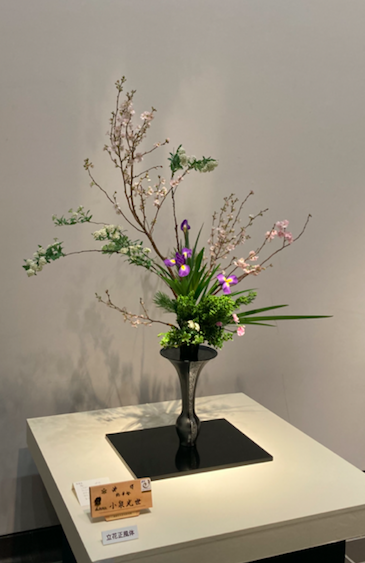
Rikka-Shofutai 立花正風体
Rikka-Shinputai 立花新風体
Tate-Bana たて花

You also know “Sado”茶道(Japanese Tea Ceremony)and Kodo 香道 (Incense Appreciation) which deeply related to Kado, those concepts depict sophisticated atmosphere, spatial arrangement in the space where is strained quiet loneliness and beauty of silence.

Basically, Ikebana used to adorn the tokonoma (alcove) in front of kakejiku(hanging scrolls) in Japanese traditional home.

Sanshu-Ike 三種生

There are various distinct schools of Ikebana in Japan. Frankly I can’t give a clear-cut explanation of the differences of them. Though, I just visited Ikenobo exhibition at Tokyo Metropolitan Art Museum, so I have learned a little about Ikenobo Kado.

There are estimated to be around over 3000 Ikebana schools in Japan, however, the largest and most popular schools of Ikebana are Ikenobo(池坊)Sougetsu(草月)Obara(小原).

The oldest Ikebana school is Ikenobo. It had begun at Muromachi-era by the monk who name is Ikenobo Senkei.

The characteristic of Ikenobo(池坊) is mainly represented these three ways of style,

 “Rikka(立花)” ,”Shoka(生花)”,”Jiyuka(自由花)”, respectively.

Rikka(立花) is emphasized as means of the materials and forms as they existed in their natural state like sky, mountain, river. It is depicting landscape of nature from Muromachi-era.

Shoka(生花) is generally used one to three materials, which express vital nature of living of flowers and leaves, branches. It was established around Edo-era.

Jiyuka(自由花) is no crucial rules or forms of figures, just try to bring out the charm of their figures and textures.

Sougetsu(草月)is more an avant-garde style of school, which was established in 1927 by Teshigahara Soufu. It is known as free and modern art approach to Ikebana. It doesn’t follow to be bound by common traditional style.

Obara(小原) was established by Obara Unshin. He possessed to utilize for expressing his way of school by using western materials and forms in Meiji-era. He developed Moribana(盛花) style, which is composed of 3 dimensions of art works.

In general, Ikenobo(池坊) contributed to the development of rikka style. Considering this fact, Ikenobo is to the oldest Ikebana school in Japan.

Ikenobo’s basic concept is, representing the state of natures – plants and flowers just exist here profoundly. The view of the world is “Less is more”- as it were,”Wabi-Sabi”.

Ikebana reached its first zenith in the 16th century. And later, in the middle of Edo era, spread widely among common people.

In the Meiji-era, most of girls’ schools brought Ikebana classes in school as part of the mandate curriculum.

Rikka-Shinputai 立花新風体

Even today, Ikebana is respected as one of the classical Japanese arts of refinement.

If you really would like to learn “Wabi-Sabi”aesthetics, this column below is one of the best descriptions about the concept.

Japan’s Unusual Way to View the World

The origins of Japanese comic strip that is commonly called “Choju-Giga” a set of four picture scrolls(Emakimono), in the mid -12th century.

Have you seen this very famous Emakimono (Scroll of Frolicking Animals and Humans)? I am sure that this caricature art works you can find everywhere in Japan. Especially mangas and animes, industrial designs, which have frequently collaborated with several art works.

The set of four picture scrolls, which are composed of “Koh-kan”甲巻、“Otsu-kan”乙巻、“Hei-kan”丙巻、”Tei-kan”丁巻、belong to the Kozan-ji Temple in Kyoto.

The scrolls are entrusted to the Kyoto National Museum and Tokyo National Museum nowadays.

“National Treasure, All About Choju-Giga” exhibition took place late spring in 2021 at National Tokyo Museum. So I visited the museum at Ueno Park, Tokyo.

Koh-kan 甲巻

All four volumes of  “Frolicking Animals” have been passing on the lively activities of anthropomorphized animals and ordinary people life in 12 – 13 centuries with energetic ink lines to our generation in 21 century.

All scenes flow from right to left, you can find quite a few animals inside this Emakimono, especially volume 1,“Koh”甲巻, most famous one, which covers a wide range of animal characters such as hares, frogs, deer, monkeys, cats, wild boars, horses, bulls, foxes and so on.

Koh-kan 甲巻

Some of them are bathing, playing sumo, praying monkey with monk robe to frog budda, deer ride, catch and run…animals are so cute and funny, fresh, vigorous!

They seem to be about to come out of the screen!

Koh-kan 甲巻

No wonder the works still keep inspiring many modern artists. It is no exaggeration to say that the origin works of Japanese mangas and animes.

There is many poultries, and imaginary animals, which were believed to exist in China until late 15 century, emerge in volume 2“Otsu”乙巻.

Otsu-kan 乙巻

In addition, volume 3 ”Hei”丙巻depicts the lives of ordinary people lively, their activities, playing and gaming scenes in downtown. The volume 4 ”Tei” 丁巻draws monks and people are playing sumo and enjoying horse ride, watching an itinerant performer with orchestra in the street.

Hei-kan 丙巻
Tei-kan 丁巻

The Chances are that you can encounter upcoming exhibitions while visiting Japan, or watch digital archives at the museum site.

https://kosanji.com/chojujinbutsugiga/

https://en.wikipedia.org/wiki/Ch%C5%8Dj%C5%AB-jinbutsu-giga

https://www.tnm.jp/modules/r_free_page/index.php?id=2009