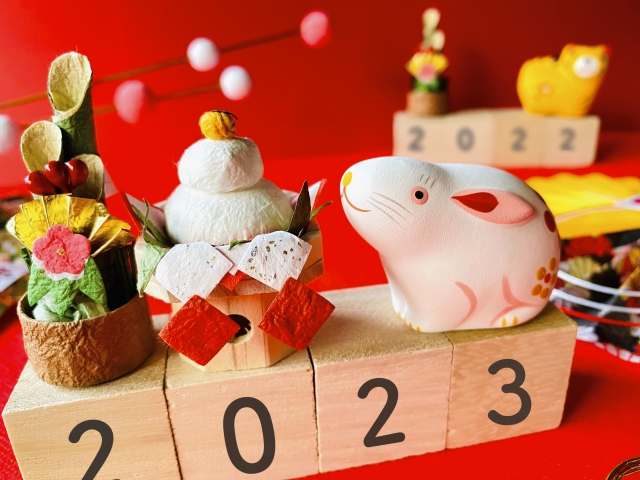
In the western countries, the most important holiday is Christmas. People celebrate and spend special time with their family members. Japanese people also go back to their hometown in the end of December and spend Shogatsu (正月)holiday until the first few days of January.
To the contrary to the western countries’ Christmas celebrations, the most important holiday in Japan is the New Year’s Day that is called “Shogatsu”.
New Year’s events already begin at the New Year’s Eve. Commonly they eat soba noodles, which is called “Toshikoshi soba” for preparing and celebrating the New Year, While listening the sound of temple’s bells “Jyoya no kane”.

In the morning of Shogatsu, they open jyu-bako bento box. “Osechi Ryori”(お節料理) is hors d’ oeuvre – a set of fortune cuisines. Every ingredient has characteristic meaning. Japanese people taste and enjoy these meals for praying New Year’s fortune and happiness, family member’s health, well-being.
Jyu-bako bento box is full of Osechi Ryori. As I mentioned before, every cuisine has each meaning, for example, it is nothing but a rhyme,
Kuro mame(black beans) – means “mame ni kurasu” (live diligently).
Meanwhile, some dishes were selected, in favor of their figures or colors.
Kazunoko (herring roe) – many eggs of herring – hopes “shison hanei” (descendants prosperity).
Kurikinton (mushed sweet potatos & chestnuts) – indicates “okane” (raise money, gold from its golden color).
Ebi (shrimp) – hopes live longer until their backs are curved (get old) like shrimps.
Zouni(雑煮)is commonly cooked baked rice cakes with some vegetables and fish cakes in broth soup of soy source or miso. Tastes are different in each region.
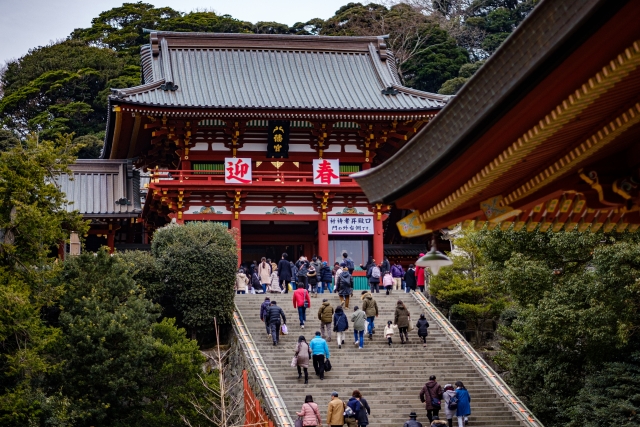
They often visit shrines or temples to make a wish and pray for the good fortune of the New Year. It is called Hatsumoude(初詣). Some people watch the sunrise from ocean or mountain.

At the same time, Japanese people send postcards(Nengajyo 年賀状) to their relatives, friends, colleagues as New Year’s greeting. It’s basic manners to be delivered to addressees until a few days of new year’s day even if belated.
Japanese children often receive some money in a small envelope (pochi-bukuro) from their parents and relatives. That is called “Otoshidama” .
While spending their relaxing, fun time with their family members, often we play traditional New Year’s games as below,

Takoage(凧揚げ)- means flying a kite. Typical kite design is traditional Japanese Ukiyoe (浮世絵), and people selects happy design to celebrate new year.
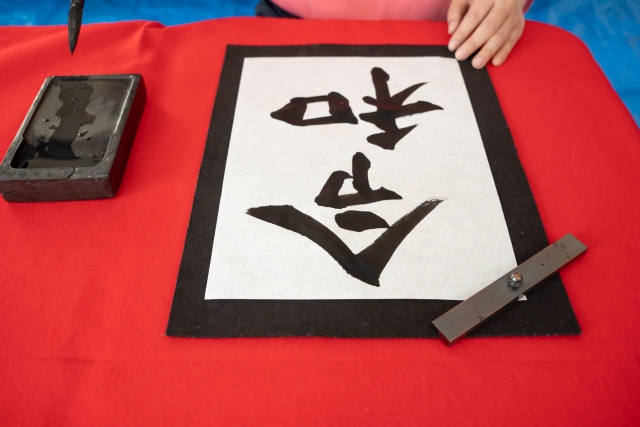
Kakizome, Shodo(書き初め,書道)-the first writing of the new year with Japanese writing brush, Fude(筆)and Sumi(墨). People write their new year’s resolutions, positive words in calligraphy by using a Japanese Shitajiki(下敷), Bunchin(文鎮), and Washi paper (和紙).
Karuta(カルタ)-Japanese playing cards are two sets of cards – reading part and picking part. Participants of the game try to pick the correct card while the partner card is chanted.
The most popular set of cards is “Hyakunin Isshu” that had been selected 100 famous poems from the 8th to the 13th century.
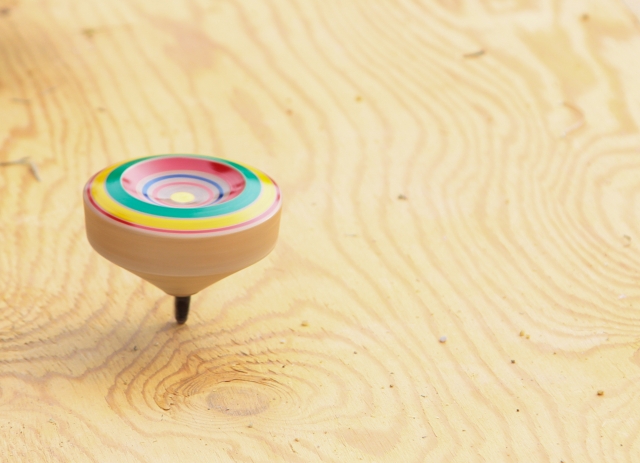
Koma-mawashi(独楽回し)- A game of top-spinning. Players try to spin fast their own spinning top on the ground. The longest spinning one will be the winner.
Hanetsuki(羽根突き)- Hanetsuki is similar to badminton game. But it uses a shuttlecock and a wooden paddle, which is drawn Japanese traditional picture by using bright colors.
There are many other regional, local events and plays in Japan.
Let’s go out and find out something new!
“Learn from the old, know the new”